The Intentional Home: A Practical Guide to Curating Your Living Space
Jun 10, 2026
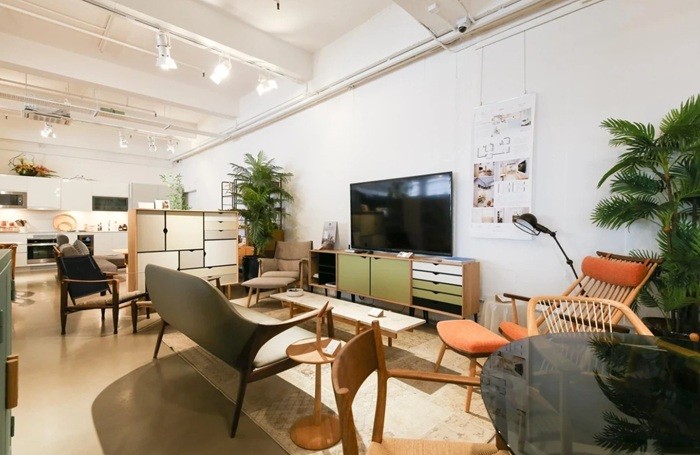
What separates a well-designed home from one that simply has furniture in it? Intentionality. The objects a person chooses to live with, from the ceramics on a kitchen shelf to the textile draped over a reading chair, collectively determine whether a space feels considered or assembled by default. Modern domestic design has made this process more accessible, but also more demanding. The market is saturated with options, which makes clarity of purpose more important than ever.
Understanding the Modern Interior Design Landscape
Choosing quality homeware over mass-produced alternatives is no longer a niche preference. It is a practical response to an oversupplied market where most products are designed to a price point, not a standard. Understanding how to navigate that landscape is the first skill any homeowner benefits from developing.
The contemporary interior design market offers two distinct paths. The first is fast, accessible, and immediate: buy a complete furniture set, fill the space, and move on. The second is slower, more selective, and ultimately more rewarding. It treats the home as something built incrementally, with each addition chosen carefully for its material quality, visual character, and practical function.
The Problem with Complete Furniture Sets
Purchasing a matched furniture set from a large retailer solves a logistical problem, but creates a design one. Rooms outfitted this way tend to look uniform and lack the layered quality that makes a space feel genuinely personal. Mass production optimises for volume and cost, not character or durability.
Beyond aesthetics, there is a longevity issue. Budget furniture manufactured at scale typically shows wear within a few years, creating a cycle of repeated replacement that costs more in the long run than a single quality investment would have.
Why Form and Function Must Work Together
Interior design literature often frames aesthetics and practicality as competing priorities. In practice, the best homeware decisions do not require a trade-off between the two. A dining chair that looks refined but is physically uncomfortable fails. A vase that reads as a sculptural centrepiece but cannot hold water fails just as completely.
The objective is pieces that function without compromise and look considered without effort.
A Practical Framework for Selecting Homeware
When approaching any significant home purchase, a clear set of criteria produces better decisions than instinct alone.
• Material Integrity: Solid wood, linen, ceramic, and natural metals are not simply premium choices. They are materials that respond to time positively, developing texture and patina rather than degrading.
• Spatial Proportion: Scale matters more than most buyers account for. Before purchasing any significant piece, understand the dimensions of the room and how the item will sit within them. Proportion errors are among the most common and most disruptive mistakes in interior styling.
• Palette Coherence: A successful colour strategy does not mean matching everything. It means ensuring that the undertones across a room are compatible. Warm and cool tones mixed without intention produce visual tension rather than depth.
The practical impact of these choices is easy to illustrate. Hand-thrown ceramic tableware brings a tactile irregularity to a dining setting that signals quality without requiring explanation. Heavyweight woven cotton textiles introduce warmth and texture in a way that synthetic alternatives, regardless of their visual similarity, cannot replicate.
Weighing the Investment: Benefits and Limitations
What You Gain
A curated approach to homeware reduces long-term expenditure by removing the replacement cycle common with lower-quality purchases. More significantly, it changes the quality of daily life within the space. Environments built with genuine care and material integrity have a measurable effect on wellbeing, producing a home that feels like a sanctuary rather than a storage solution.
What It Costs
There is no point softening this: quality homeware costs more upfront. Artisanal craftsmanship, premium raw materials, and considered design are more expensive to produce and therefore to purchase. The trade-off is real, and the approach requires patience. A well-curated home is a long-term project, not a quick result.
Frequently Asked Questions in Home Styling
The most common concern raised by people beginning a curation-focused approach is how to integrate pieces from different design periods without producing visual inconsistency. The answer is to identify a unifying element, whether that is a shared material, a consistent colour undertone, or a common design sensibility, rather than trying to match everything stylistically.
A mid-century timber credenza, for example, can sit naturally beside contemporary minimalist ceramics when both share warm wood tones and a restraint of form. The principle is compatibility, not uniformity.
Creating an interior that is both visually coherent and personally meaningful is not about following rigid design rules. It is about developing a clear point of view, then applying it consistently through every object you choose to bring into the space.