Business
How Should Financial Institutions Store and Control Signature Stamps
Aug 17, 2026
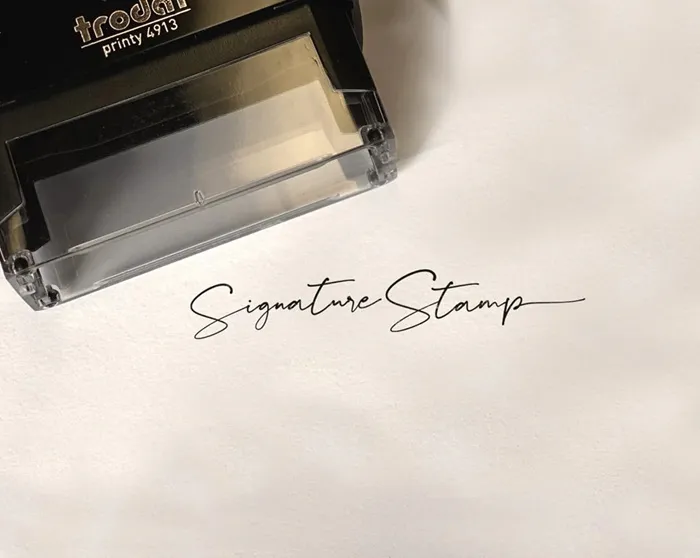
Signature stamps are commonly used by financial institutions for approving documents, checks, forms, and other transactions. Since a stamped signature can represent an authorized person, the stamp has to be controlled properly.
If a signature stamp is left in an open area or accessible to unauthorized employees, it can be misused. Therefore, financial institutions must follow proper storage and control practices to protect the stamp and the documents signed with it.
How Should Financial Institutions Store and Control Signature Stamps?
Store Signature Stamps in a Secure Location
The first step is to store signature stamps in a secure location when they are not being used.
A bank or financial institution may have several employees who use signature stamps for different purposes. Each stamp must be kept in a location where only authorized personnel can access it.
A locked cabinet, safe, or secured drawer can be used for storing the stamps. The storage location should also be away from areas that are accessible to visitors or employees who do not need access to the stamps.
The stamp should be returned to its storage location immediately after use. Leaving it on a desk can create an unnecessary security problem.
Allow Access Only to Authorized Employees
Financial institutions must control who can use a signature stamp.
An employee should not be allowed to use a stamp simply because it is available. Access should be provided only to people who have been authorized to use that particular signature stamp.
The institution can maintain a list of employees who are permitted to access each stamp. This makes it easier to identify who is responsible for the stamp and reduces the possibility of unauthorized use.
If an employee changes their position or leaves the institution, their access to the stamp should be removed immediately.
Maintain a Signature Stamp Register
A signature stamp register can help financial institutions keep track of their stamps.
The register can contain details such as the name of the person represented by the stamp, the department using it, the employee responsible for it, and its storage location.
The date of issue and return can also be recorded when the stamp is provided for use.
This record becomes useful when an institution needs to investigate missing stamps, unauthorized use, or unusual transactions.
Control the Use of Stamps for Checks
Signature stamps can sometimes be used for signing checks, but financial institutions must follow their internal policies and applicable banking requirements.
People often ask, "Is Signature Stamp Legal For Checks?" The legality and acceptance can depend on the applicable laws, banking rules, account requirements, and the policies of the institution involved.
Therefore, a financial institution should have a clear policy explaining when a signature stamp can be used on checks and who can authorize its use.
For high value or sensitive transactions, additional approval may also be required.
Keep a Record of Each Use
Recording the use of a signature stamp can provide another level of control.
For example, the employee using the stamp can record the date, transaction type, document involved, and reason for using the stamp.
This information can help the institution identify who used the stamp if a problem occurs later.
For frequently used stamps, a digital or physical usage record can be maintained according to the institution's internal procedures.
Inspect Stamps Regularly
Signature stamps should also be checked from time to time.
The institution should verify that the stamp is still in the possession of the assigned employee and that it has not been damaged, lost, or copied.
If a stamp is damaged, it should be replaced and the old stamp should be removed from use. If a stamp goes missing, the responsible department should be informed immediately.
The institution can then take appropriate steps to prevent unauthorized documents from being approved with the missing stamp.
Conclusion
Financial institutions need proper controls for storing and using signature stamps because these stamps can represent an authorized signature.
Keeping them in locked storage, limiting access, maintaining a register, recording their use, and checking them regularly can reduce the possibility of misuse.
A clear internal policy can also help employees understand when and how a signature stamp should be used. When these controls are followed consistently, financial institutions can manage signature stamps in a safer and more organized manner.